Sciatic Nerve Pain Remedies
What Would Real Progress Actually Look Like?
Welcome to the VIR Sciatic Nerve Pain Remedy forum!
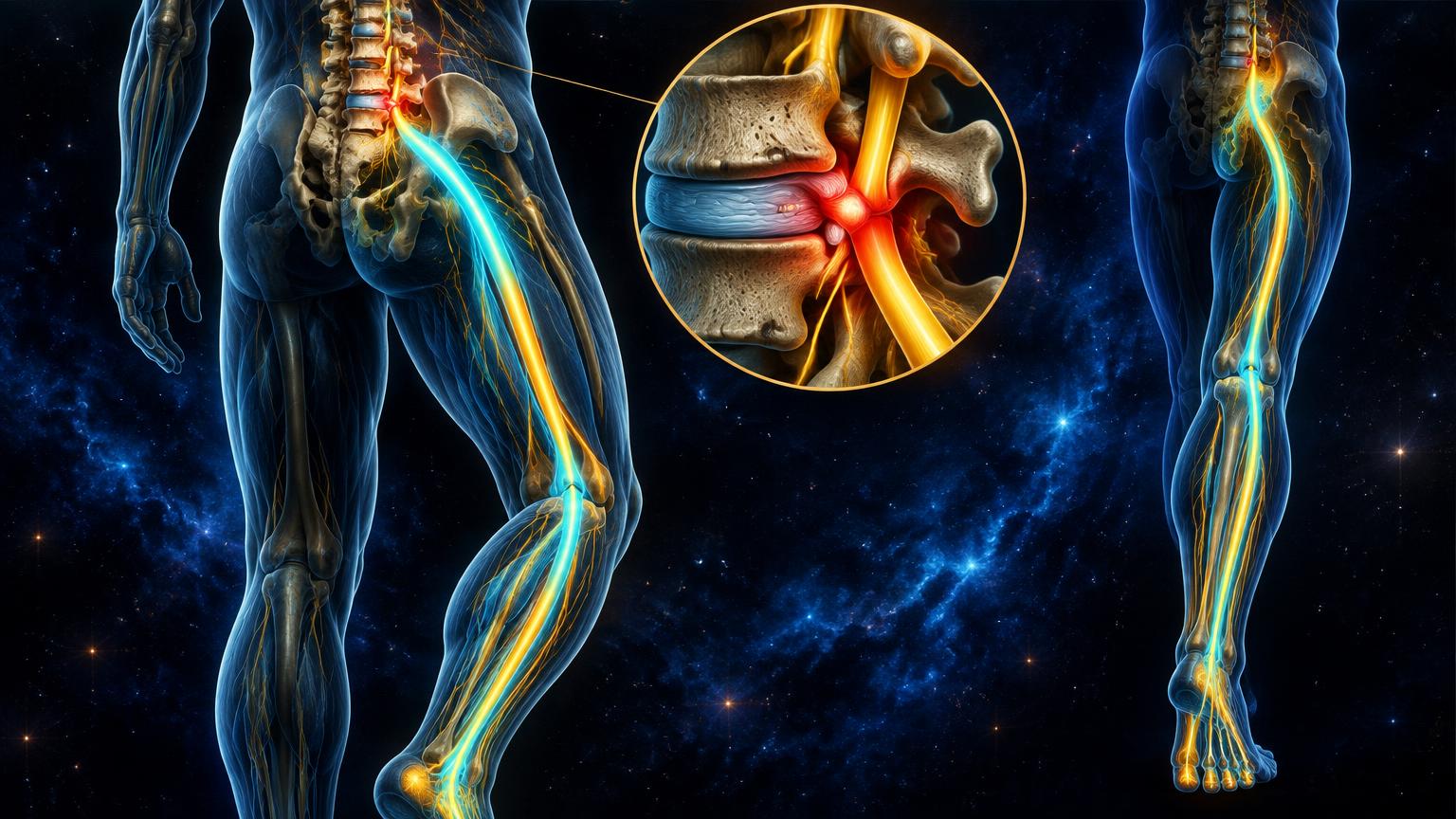
Sciatica is one of those conditions that sits at an uncomfortable intersection: extremely common, often debilitating, and still poorly solved for a large percentage of people. Conventional approaches (physical therapy, NSAIDs, epidural steroid injections, and eventually surgery) help many, but leave a sizable group with incomplete relief, recurrence, or unwanted side effects. That gap is exactly the kind of problem VIR exists to examine.
This thread is not about trading home remedies or personal anecdotes as medical advice. It’s about asking a more rigorous question:
What would it actually take to move the needle on sciatic nerve pain in a meaningful, reproducible way?
What kinds of studies would need to be done?
Meaningful progress would require several complementary layers of research rather than a single “miracle” trial:
- Mechanistic studies — Better characterization of the different phenotypes of sciatica (pure compressive radiculopathy vs. inflammatory vs. central sensitization-dominant vs. mixed). This includes advanced imaging, quantitative sensory testing, inflammatory markers, and possibly nerve-specific biomarkers.
- Well-controlled interventional trials — Randomized, adequately powered studies that test specific interventions against active controls (not just placebo). These could include refined physical therapy protocols, novel neuromodulation approaches, targeted anti-inflammatory strategies, regenerative techniques, or combinations thereof. Long-term follow-up (12–24 months) is essential because short-term pain reduction often fails to predict durable function.
- Comparative effectiveness research — Head-to-head studies that measure not only pain scores but also function, medication use, return to work, and quality of life. Many existing studies are too small, too short, or too narrowly focused on a single outcome.
- Safety and durability data — Especially important for any newer or less conventional approaches. We need clear signals on both benefit and risk across different patient subgroups (age, duration of symptoms, presence of disc herniation vs. stenosis, prior surgeries, etc.).
- Real-world evidence and stratified medicine — Large observational cohorts and pragmatic trials that help identify who responds to what. Sciatica is not one disease; treating it as if it were has limited progress.
Who could usefully contribute to this?
- Clinicians (physiatrists, neurologists, pain specialists, orthopedic and neurosurgeons, physical therapists) who see the full spectrum of presentations and treatment failures.
- Researchers in neuroscience, pain physiology, biomechanics, and regenerative medicine.
- Engineers and technologists working on neuromodulation, imaging, wearable sensing, or targeted drug delivery.
- Patients with lived experience who can articulate the functional impact, treatment burden, and outcomes that matter most (not just a 0–10 pain score).
- Methodologists and statisticians who can help design studies that actually answer the right questions instead of producing more underpowered, short-term data.
- Anyone with domain expertise in adjacent areas (inflammation, nerve repair, central pain processing, etc.) who sees possible cross-applications.
The goal here is not to crowdfund a single experiment or declare a new cure. It is to map the real gaps, surface credible hypotheses, and identify the kinds of people and methods that would be required to test them properly.
If you have relevant clinical experience, research background, technical ideas, or carefully observed patient patterns, contribute. Keep claims proportional to the evidence, distinguish mechanism from proven outcome, and focus on what would need to be true for a given approach to matter.
Let’s treat this like a research problem instead of a comment section.
Let the brainstorming begin!

Research Notes (0)
- Loading comments…